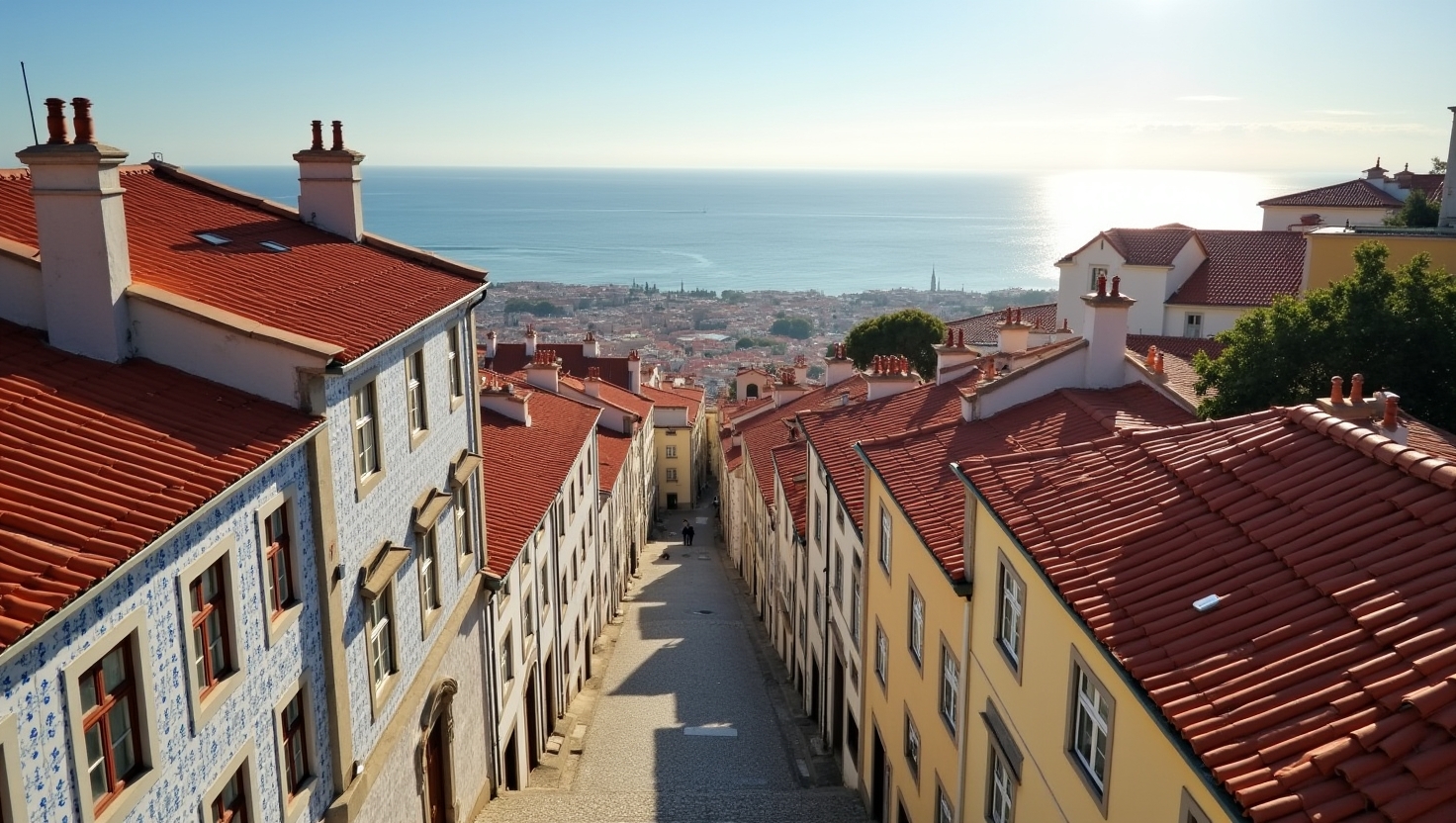
TL;DR: The Portugal D7 visa is a passive-income residency permit for Americans whose income from pensions, Social Security, investment distributions, or rental income meets the minimum threshold. The immigration approval is generally straightforward. The harder problem is that D7 residency triggers Portuguese tax residency, and structuring your US income correctly before you arrive determines whether you pay standard Portuguese rates or qualify for the IFICI regime.
According to Portugal's Agency for Integration, Migration and Asylum (AIMA), the number of US citizens legally resident in Portugal jumped from 14,129 in 2023 to 19,258 in 2024, a 36% increase in a single year, as reported by idealista.pt in October 2025. For most of them, the Portugal D7 visa was the front door. And for most of them, the immigration side went fine. The tax side is where things got complicated.
Key takeaways
- The D7 requires passive income of at least €920/month in 2026, linked to Portugal's national minimum wage, plus add-ons for family members.
- Once D7 residency makes you a Portuguese tax resident, your worldwide US income — pensions, Social Security, IRA distributions — becomes subject to Portuguese personal income tax rules.
- IFICI (Portugal's current tax incentive regime, often called NHR 2.0) does not cover pension income or IRA distributions at the flat 20% rate; those are taxed at standard progressive rates of up to 48%.
- The IFICI application window closes on January 15 of the year following your first year of Portuguese tax residency. Miss it, and you lose it permanently.
What Is the Portugal D7 Visa and Who Is It For?
The Portugal D7 visa, formally the Passive Income Visa, is a Portuguese long-stay residency permit issued to non-EU nationals who can demonstrate sufficient passive or regular income to support themselves without local employment. It's administered through a Portuguese consulate in the US, and after arrival, you convert it to a residence permit through AIMA, Portugal's immigration authority (which replaced the former SEF).
The primary audience is American retirees, financially independent individuals, and early retirees whose income comes from pensions, Social Security, IRA or 401(k) distributions, dividends, or rental income. If your income derives from an employer or clients, you're looking at the D8 digital nomad visa instead.
One change worth knowing before you compare visa options: Portugal amended its nationality law in May 2026 (Lei Orgânica n.º 1/2026, effective May 19, 2026), extending the citizenship eligibility timeline from 5 to 10 years for most non-EU nationals, including Americans. As Legal 500 confirmed in August 2026, the clock starts from the issuance of your first residence permit card, and it applies to all legal residents — D7, D8, and Golden Visa holders alike. That change reshapes the comparison between the D7 and the Golden Visa in ways I'll cover below.
Establishing a D7 residency is a tax event that restructures how every dollar of your US retirement income is reported and taxed, not just an immigration decision.
What Income Qualifies — and How Much Do You Need?
The D7's income floor is tied to Portugal's national minimum wage. According to LegalClarity's June 2026 guide, which cites the Republic of Portugal's official minimum wage announcement, the 2026 thresholds are:
- Primary applicant: €920/month
- Spouse or additional adult: +€460/month (50% of minimum wage)
- Each dependent child: +€276/month (30% of minimum wage)
So a couple planning to move together needs to show at least €1,380/month, and a family of three needs at least €1,656/month. These are the floor figures; consulates in Lisbon and Porto tend to apply stricter scrutiny in practice, and showing income meaningfully above the minimum strengthens the application.
What qualifies as income for D7 purposes: retirement pensions, US Social Security benefits, regular IRA or 401(k) distributions, dividends and interest, rental income from domestic or foreign property, royalties, and annuity payments.
What does not qualify: unrealized portfolio value, line-of-credit draws, or active freelance or employment income. That's D8 territory.
Documentation the consulate expects:
- Bank statements (typically 3–12 months) showing consistent deposits
- US tax returns (Form 1040)
- Social Security award letter
- Pension award letters or 1099-R forms
- Brokerage statements showing regular distributions
- Lease agreements and tax filings for rental income
- Criminal background check (apostilled), required for every applicant aged 16 or older
- Proof of accommodation in Portugal (signed lease registered with the Portuguese Tax Authority)
Consulates want to see consistent, recurring deposits, not a lump sum sitting in a bank account.
D7 Visa Monthly Income Thresholds by Household (2026, €)
A couple with two children needs to demonstrate roughly twice the income of a single applicant — worth modelling before you gather documents.
Source: Republic of Portugal national minimum wage, 2026; Portaria 1563/2007 methodology, via LegalClarity
Chart data
| Value | |
|---|---|
| Single applicant | 920 |
| Couple | 1,380 |
| Couple + 1 child | 1,656 |
| Couple + 2 children | 1,932 |
How D7 Residency Triggers Your Portuguese Tax Obligations
This is the part that surprises people. Once you spend more than 183 days in Portugal in a calendar year, or establish your habitual residence there, you become a Portuguese tax resident, subject to Portuguese personal income tax (known locally as IRS, not to be confused with the US agency) on your worldwide income.
The common pattern we see in planning sessions is this: an American retiree qualifies for the D7 on IRA distributions and a private pension, focuses entirely on the immigration checklist, arrives in Portugal in spring, crosses the 183-day threshold in the same calendar year, and files their first Portuguese tax return only to discover that the income they used to qualify for the visa is now being taxed in Portugal as well.
The US-Portugal tax treaty (signed in 1994, effective January 1, 1996) allocates taxing rights differently by income type, according to the treaty text published by the US Treasury and Greenback Tax Services' October 2026 treaty guide:
- Private pensions and IRA distributions (Article 20(1)(a)): Primary taxing rights go to the country of residence (Portugal), though the US saving clause preserves US taxation rights for citizens.
- US Social Security (Article 20(1)(b)): The US retains primary taxing rights; Portugal may also tax but must credit US taxes paid. For detail on how this plays out in practice, see our post on how US Social Security is taxed for Americans living in Portugal.
- US government service pensions (Article 21): Taxed exclusively by the US, unless the recipient is both a Portuguese resident and a Portuguese national.
- Dividends: Residence country taxes; source-country withholding capped at 15% (Article 10).
D7 residency also activates your FBAR, FATCA, and Form 8938 reporting obligations for American expats, a separate planning layer you'll need to stay on top of.
As for context on Portuguese rates: ECO News reported on October 19, 2026, citing the Tax Foundation's 2026 International Tax Competitiveness Index, that Portugal ranked 33rd out of 38 OECD countries despite recording the third-largest score increase (58.4 to 59.6). The 53% top personal income tax rate (48% IRS plus a 5% solidarity surcharge) was flagged as a persistent weakness. Portugal is improving, but a D7 arrival with significant retirement income and no advance planning will face rates that are far from benign.
IFICI vs. Standard Portuguese Tax — Why You Must Choose Before You Arrive
This is where the real planning work happens. IFICI — the Investment, Innovation and Creation Incentive regime (Portugal's current tax incentive framework, which replaced the original NHR regime; sometimes called NHR 2.0) — offers a 20% flat tax rate for up to 10 non-renewable years on qualifying income. What "qualifying" means is where most people get tripped up.
IFICI covers qualifying Portuguese employment (Category A) or self-employment (Category B) income from a list of eligible professional activities: research, higher education, highly qualified roles in designated sectors, and similar. According to FRESH Legal Group's IFICI guide (updated April 2026) and confirmed by e-residence.com's July 2026 analysis, the 20% flat rate does not cover:
- Foreign pension income
- IRA and 401(k) distributions
- Foreign private pensions
Those are taxed at standard progressive Portuguese IRS rates. Foreign dividends, interest, capital gains, and rental income from non-blacklisted jurisdictions may be exempt under IFICI, but only if you qualify for IFICI through one of the active professional routes in the first place. A retiree whose only income is a pension and IRA distributions generally won't qualify for IFICI at all.
The planning window is strict. Per KPMG's Portugal tax guide and fresh-legal.com's Portuguese Tax Authority FAQ (September 2026), the IFICI application must be submitted through the Portal das Finanças by January 15 of the year following the year you become a Portuguese tax resident. Become resident during 2026 and you must apply by January 15, 2027. Miss that window and you lose IFICI access permanently.
The 2027 budget proposals add a new layer. According to Ana Rita Teles, Tax Lawyer at FRESH Legal Group, writing on October 21, 2026, Portugal's proposed 2027 State Budget would raise all nine IRS bracket thresholds by approximately 3.88% and lift the solidarity surcharge threshold from €80,000 to €89,995, while keeping the top IRS rate at 48% and the maximum combined rate at approximately 53%. This is a draft proposal (submitted to Parliament October 8, 2026; parliamentary vote running through November 24, 2026) and has not yet been enacted. It signals the trajectory, though: the brackets are moving, the top rate isn't, and a D7 holder on standard rates with substantial retirement income will want to model both the current and proposed figures before committing to a move date.
The most expensive single mistake in D7 financial planning is taking large IRA distributions or executing Roth conversions in your first year of Portuguese residency without IFICI protection and without having modeled the Portuguese tax exposure in advance. The question of whether to convert your IRA to a Roth before moving to Portugal deserves careful analysis before your application goes in, not after your first Portuguese tax return arrives.
D7 Tax Planning: Key Decision Points
- 1Structure income pre-move
Before submitting your D7 application, model how each income type (pension, IRA, Social Security, dividends) will be taxed under Portuguese rules once you establish residency.
- 2Assess IFICI eligibility
Determine whether your professional activity or income structure qualifies for IFICI's 20% rate — most retirees with only passive income will not qualify.
- 3Time the Roth conversion decision
Decide whether to execute Roth conversions before you become a Portuguese tax resident, since Roth distributions may not receive treaty protection in Portugal.
- 4Apply for IFICI on time
By Jan 15, year after residen…
If you do qualify, submit your IFICI registration through the Portal das Finanças before the hard January 15 deadline — missing it forfeits the regime permanently.
- 5File both US and Portuguese returns
Coordinate Form 1040, Model 3 (Portugal's annual tax return with Annex J for foreign income), and FBAR/FATCA obligations for the first and each subsequent year.
Each stage has a hard sequence — decisions made at stage one can't be undone at stage four.
D7 vs. Golden Visa vs. D8 — A Quick Decision Framework
The three main residency pathways for Americans in Portugal serve very different income profiles. Choosing the wrong one has lasting tax consequences, because the visa type doesn't change the Portuguese tax rules that apply once you're resident.
- The retiree with a $4K/month pension. The D7 is the natural fit. Pension income qualifies directly, no investment capital is required, and the path to permanent residency involves genuinely living in Portugal. Since Portugal's May 2026 nationality law change extended citizenship to 10 years for Americans across all permit types (per Legal 500, August 2026), the Golden Visa no longer offers a faster citizenship timeline, removing what was previously its main advantage over the D7 for this profile.
- The early retiree with a significant investment portfolio. The D7 is viable if they're taking regular distributions; the Golden Visa is an option if they want to deploy capital into a qualifying fund investment (minimum €500,000) and prefer a lower physical-presence requirement (as low as 7 days/year). For detail on the investment side, see our post on Portugal Golden Visa requirements for US investors. The trade-off is now almost entirely about lifestyle preference and how much capital the applicant wants to commit, since citizenship timelines have converged.
- The remote worker with W-2 or freelance income. The D8 digital nomad visa is purpose-built for active remote employment or freelance income, with a much higher income threshold (approximately €3,680/month, per VivEurope's July 2026 comparison guide). The D7 requires passive income; a W-2 employee would generally not qualify on earned income alone. D8 holders also have their own IFICI pathway considerations, and W-2 employees moving abroad need to think carefully about employer permanent establishment risk, which is a separate conversation.
The D7 is a passive-income visa; the D8 is an active-income visa; the Golden Visa is an investment visa. So if you're still trying to figure out which one fits your situation, the answer usually starts with your income structure, not your lifestyle preferences.
Frequently asked questions
What income qualifies for the Portugal D7 visa?
The D7 accepts recurring passive or regular income: retirement pensions, US Social Security benefits, regular IRA or 401(k) distributions, dividends, interest, rental income, royalties, and annuities. Unrealized portfolio gains, line-of-credit draws, and active employment or freelance income generally do not qualify. According to LegalClarity's 2026 guide, consulates look for consistent deposits over several months, not a single lump sum.
How does getting a D7 visa affect my US taxes?
It doesn't change your US filing obligations — Americans owe US tax on worldwide income regardless of where they live, due to the saving clause in the 1994 US-Portugal tax treaty. What it adds is a Portuguese tax obligation. Once you cross the 183-day threshold and become a Portuguese tax resident, your worldwide income becomes subject to Portuguese personal income tax as well. The treaty allocates taxing rights by income type, and a foreign tax credit (Form 1116) helps offset double taxation, but the interaction requires planning, not assumption.
Should I get a D7 visa or Golden Visa for Portugal?
It depends on your income profile and lifestyle preferences. The D7 suits Americans with regular passive income (pensions, distributions, dividends) who plan to genuinely relocate; the Golden Visa suits Americans who want to maintain optionality with minimal physical presence and have capital to invest (minimum €500,000). Since Portugal's May 2026 nationality law change aligned citizenship timelines to 10 years for both permit types for Americans (per Legal 500, August 2026), the decision now turns almost entirely on income structure and how much time you actually plan to spend in Portugal.
What is IFICI and does it help D7 holders?
IFICI (the Investment, Innovation and Creation Incentive regime, Portugal's replacement for the original NHR) offers a 20% flat rate for up to 10 years on qualifying Portuguese employment or self-employment income. It does not apply to pension income, IRA distributions, or most passive foreign income that D7 applicants typically receive — those are taxed at standard progressive rates of up to 48%, per FRESH Legal Group's April 2026 IFICI guide. Whether you qualify for IFICI at all depends on your professional activity, not your residency visa type, and the application deadline is January 15 of the year following your first year of Portuguese tax residency.
The D7 is accessible. The tax position takes work.
The Portugal D7 visa is one of the most accessible residency pathways in Europe for American retirees and financially independent individuals. The income threshold is reasonable, the qualifying income types match what most Americans in or near retirement are already drawing, and the process — consulate application, then AIMA permit — is well-documented.
But before you submit your Portugal D7 visa application, you'll want to model your post-residency tax position. The income you choose to show on your D7 application is also the income Portugal will tax you on. Getting the structure right first — IFICI eligibility, treaty coordination by income type, Roth conversion timing, and the cross-border financial planning for Americans in Portugal that ties it together — is the work that happens before you book your flight.
Want to see how your specific US income will be taxed once you establish D7 residency in Portugal? Our webinar Annual Portuguese Taxes for American Expats walks through exactly how IFICI, standard IRS rates, and the US-Portugal treaty interact for retirement income, IRA distributions, and investment income. Watch it free → Annual Portuguese Taxes for American Expats